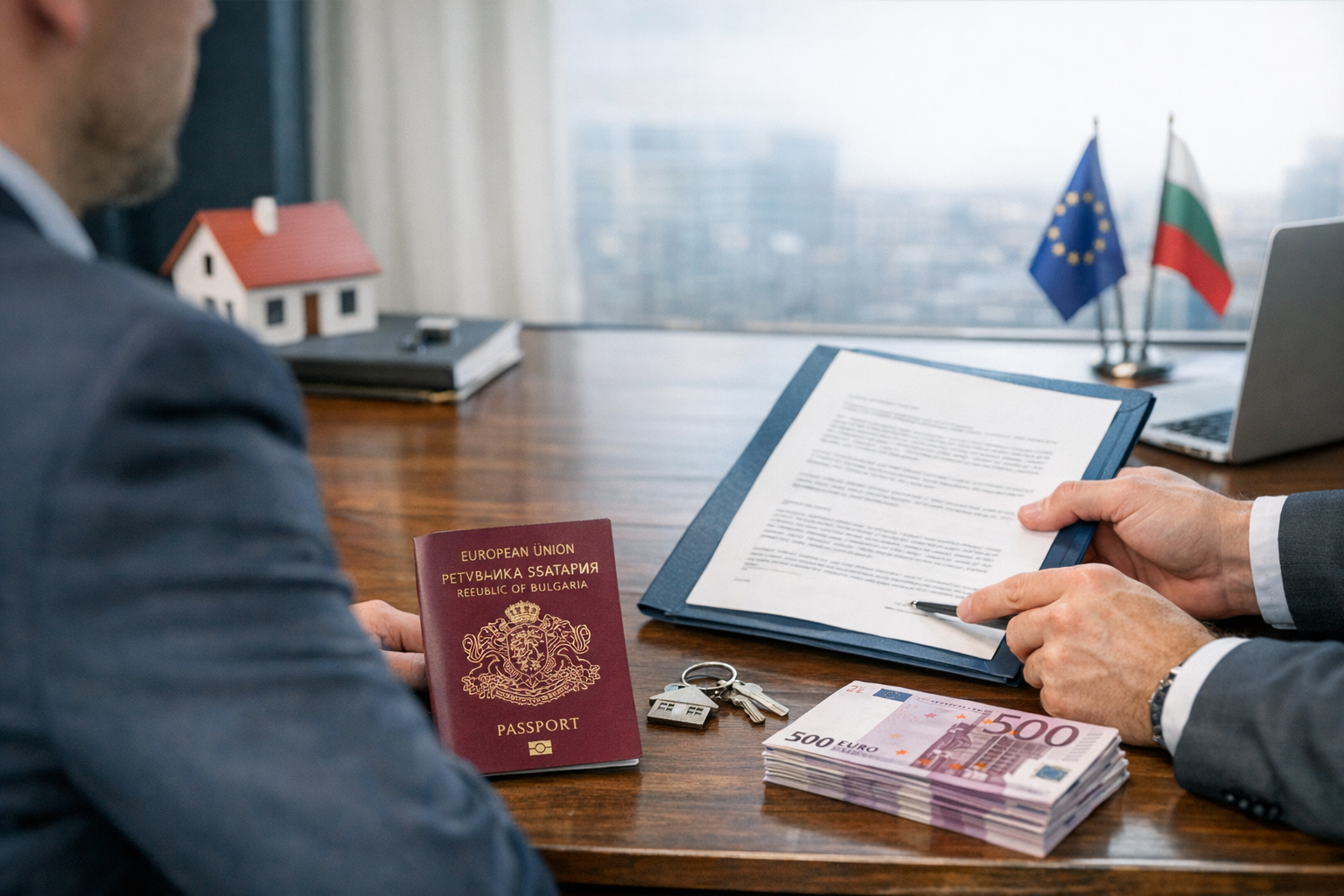
At BSLC, we often encounter a situation in which, after a parent dies, one child produces a notarial deed showing that the parent gifted them a property years earlier. The other heirs are surprised because they knew nothing of the gift and discover that they have effectively been left without an inheritance. Their first reaction is usually emotional, but a practical question soon follows. Can the gift agreement be challenged, and under what conditions?
This matters because a gift agreement is valid in principle and transfers property rights immediately. Bulgarian law nevertheless provides several grounds for challenging it, available both to the parties and to third parties, including heirs with reserved shares. Delaying action can mean missing deadlines or making proof more difficult.
BSLC assists with challenges to property gifts between relatives, inheritance disputes over gifted property, protection of reserved shares, claims that a gift is void or voidable, proceedings to reduce or revoke gifts and advice where a sham transaction is suspected.
On what grounds can a gift agreement be declared void or set aside?
Gifts are governed by the Bulgarian Obligations and Contracts Act, whose approach broadly corresponds to general contract law principles in continental legal systems such as the German Civil Code, or BGB. Under Article 225, a gift is a gratuitous transfer of property that takes effect immediately and is accepted by the recipient.
Despite its apparent simplicity, a gift remains subject to the general rules governing the validity of transactions. It may therefore be challenged for nullity, the most serious form of invalidity, or voidability arising from defects in consent.
Nullity of a gift
A void agreement has no legal effect from the outset. The principal grounds under Article 26 of the Obligations and Contracts Act include illegality or infringement of good morals, absence of consent, failure to comply with the required form, absence of legal cause and simulation. The form is particularly important for real estate, where a notarial deed is required.
Simulation is especially common. For example, parties may disguise a gift as a sale to avoid future claims by heirs. Article 17(1) then applies, giving effect to the concealed transaction if it meets the legal requirements.
A claim for nullity has no limitation period and may be raised at any time, including as a defence in proceedings.
Voidability of a gift
Unlike a void agreement, a voidable agreement remains valid until the court sets it aside. The grounds concern defects in consent, including mistake, fraud, threats and conclusion by a person lacking legal capacity.
A constitutive claim must be brought to set the agreement aside. The period is three years, with the starting point depending on the ground relied upon, such as discovery of fraud or the end of the threat.
Practical issues
Gift disputes commonly require proof of whether there was a real intention to make a gift, whether the donor could understand and control their actions, whether another transaction was concealed and whether the formal requirements were met.
A common mistake is to rely on only one ground without considering all available legal approaches. Claims are often joined, for example a claim for nullity with an alternative claim to set the gift aside.
When can heirs challenge a gift that infringes their reserved share?
Infringement of a reserved share is a frequent reason for litigation over gifted property. The Bulgarian Inheritance Act, conceptually similar to the French réserve héréditaire, protects descendants, parents and a spouse.
Under Article 30(1), an heir with a reserved share may seek reduction of gifts if they cannot receive that share in full.
What does this mean in practice?
The gift is not automatically revoked. The estate is first calculated under Article 31, gifts are added, and the disposable portion and reserved shares are established. A gift exceeding the permitted amount is then reduced.
Gifts are reduced in a prescribed order, beginning with the most recent and working backwards under Article 33.
Special rules for real estate
Article 36 addresses property that cannot conveniently be divided. The property may remain in the estate and the recipient receive monetary compensation. Alternatively, the recipient may retain it and pay the amount due.
Time limits and conditions
- The reduction claim is not subject to a short preclusive deadline, but is linked to acceptance of the inheritance.
- When brought against third parties who are not heirs, acceptance under inventory is required by Article 30(2).
- Subsequent disposals of the property are subject to additional restrictions under Article 37.
Common mistakes
Typical errors include confusing nullity with reduction, failing to accept under inventory, calculating the reserved share incorrectly and obtaining no valuation for the relevant date. An inheritance lawyer’s role is crucial because the calculations and legal analysis are inseparable.
How do court proceedings challenging a property gift work?
The procedure depends on whether nullity, setting aside or reduction is sought. Each involves substantial factual and legal complexity.
The competent court
Under Article 109 of the Bulgarian Code of Civil Procedure, comparable to civil procedure codes elsewhere in the EU, claims concerning rights in real estate are brought where the property is located. This rule also applies to claims for nullity, setting aside, rescission or reduction.
Types of claim
Depending on the circumstances, a declaratory claim for nullity, a constitutive claim to set the agreement aside or a special claim to reduce the gift may be brought. These claims are often combined to cover the available legal grounds.
Evidence
Article 154(1) of the Code of Civil Procedure requires each party to prove the facts supporting its position. Evidence in gift disputes may include medical expert opinions where capacity is in question, witness testimony, notarial deeds and other documents, property valuations and evidence of simulation.
The course of proceedings
The process usually involves filing a statement of claim, exchanging pleadings, court hearings, taking evidence, a first-instance judgment and a possible appeal. Property disputes almost always proceed through more than one level of court.
Practical risks
Proceedings often last several years, involve substantial costs and difficult evidence, and create a risk that the property will be disposed of while the dispute is pending. Timely legal assistance is therefore critical. The strategy chosen at the outset often determines the result.
A consultation with a lawyer can provide a case-specific assessment and strategy. The legal fees calculator can help estimate costs, particularly in complex inheritance disputes.