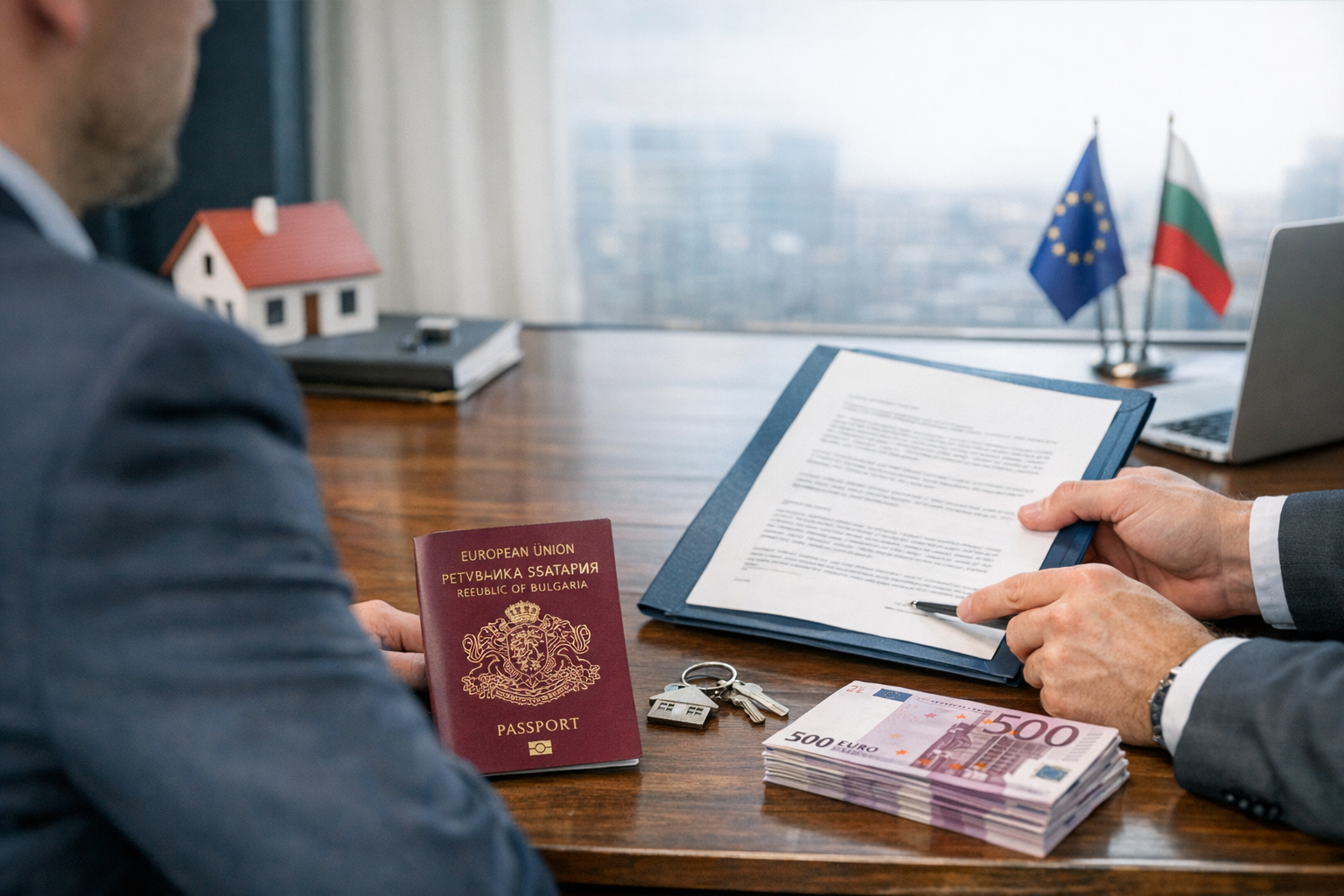


A client recently approached BSLC about an apartment purchased during marriage. The husband had paid the entire price using savings from before the marriage and money from his own business. The notarial deed was in his name alone. Years later, during divorce proceedings, the other spouse claimed a share because the property had been acquired during marriage. “If I paid for everything, is it not mine?” is a question we hear almost daily.
Disputes over matrimonial property are extremely common and carry serious risks in divorce, inheritance and enforcement proceedings. Bulgarian law does not determine ownership solely by asking who paid. It focuses on joint contribution.
Our team regularly deals with purchases during marriage funded by one spouse, division of property on divorce, claims for a larger share or exclusive ownership, proof of the source of funds and claims based on the transformation of separate property.
Who owns property acquired during marriage?
The main rule appears in the Bulgarian Family Code. Its approach resembles community property systems in some jurisdictions but places particular emphasis on contribution rather than the formal act of acquisition.
Under Article 21(1), property rights acquired during marriage through joint contribution belong jointly to both spouses, regardless of whose name they were acquired in.
It therefore does not matter who is named in the notarial deed, who formally paid the price or who took out the loan. If the property was acquired during marriage through joint contribution, it falls within the matrimonial community of property.
Article 21(3) expressly presumes joint contribution unless the contrary is proved.
Contribution is not only financial. Article 21(2) also recognises work, childcare and household work. A spouse who paid nothing towards the purchase but cared for the children or maintained the household is therefore regarded as contributing.
Payment by one spouse alone does not automatically make the property that spouse’s separate property.
Can the property be separately owned if one spouse paid for it?
Yes, but only under specific conditions. Article 23 of the Family Code provides an exception through transformation of separate property.
Under Article 23(1), property rights acquired during marriage entirely with separate property are themselves separate. If it can be proved that the whole purchase price came from funds qualifying as separate property, the acquired property remains separately owned.
Under Article 22(1), separate property includes assets acquired before marriage, by inheritance or by gift.
For example, selling an apartment owned before marriage and using the proceeds to buy another may result in separate ownership of the new apartment. The same may apply where a parent gives money for the purchase or inherited funds are used.
There is an important distinction. Earnings received during marriage count towards joint contribution even if they are regarded as one spouse’s own money. Using salary earned during marriage to buy a property therefore does not constitute transformation of separate property.
Article 23(2) also recognises partial transformation. Where part of the price comes from separate funds and part from joint funds, the property is partly separate and partly matrimonial community property.
For example, 60% separate funds and 40% joint funds produce 60% separate ownership and 40% joint ownership. If the separate contribution is insignificant, however, the court may treat the entire property as joint.
How can separate ownership be proved?
This is often the hardest part of a matrimonial property dispute. The law allows a claim based on absence of joint contribution or transformation, with Article 21(4) of the Family Code relevant to the available proceedings.
The spouse asserting separate ownership bears the burden of proof. They must establish the separate origin of the funds, the connection between those funds and the purchase, and the absence of joint contribution.
All forms of evidence are admissible, including documents, bank transfers, contracts and witnesses. The strongest evidence usually consists of bank statements, contracts selling premarital assets, gift deeds, inheritance documents and payment orders to the seller.
Common difficulties include cash payments whose source cannot be traced, mixing separate and joint funds, undocumented gifts based on oral arrangements and describing family earnings as separate money. These issues frequently lead to litigation on divorce or inheritance.
A declaratory claim recognising separate ownership may be brought even during marriage where a risk exists, for example from creditors.
If a purchase is planned using separate funds, the source should be documented beforehand, recorded in the notarial deed and discussed with a family and inheritance lawyer.
Otherwise, the court will start from the presumption of joint contribution and will most likely treat the property as joint. If a dispute has already arisen, a timely consultation with a lawyer can be decisive, particularly for valuable assets such as real estate.