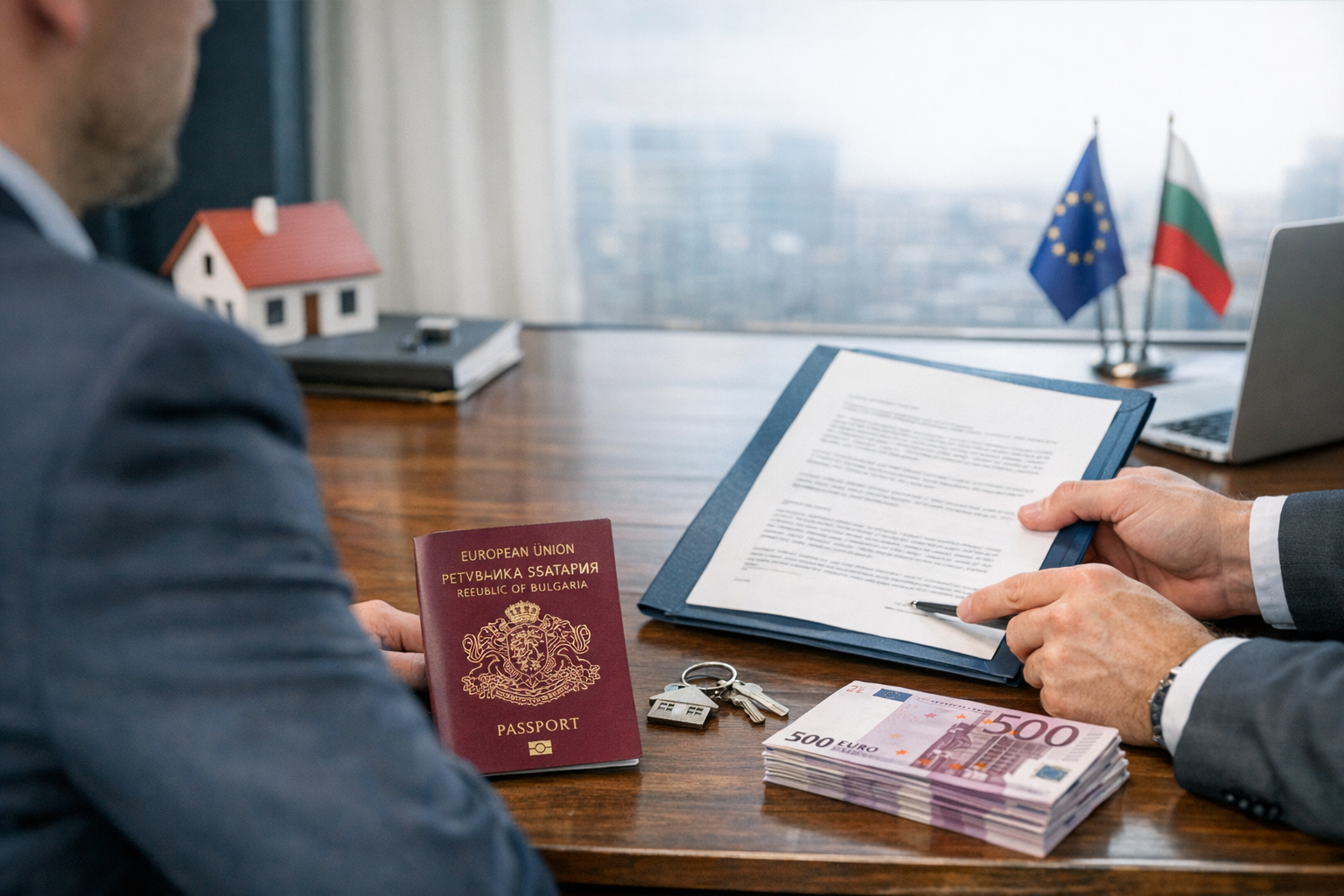


A client contacts BSLC after paying the full price for an apartment advertised as a bargain. The transaction was completed before a notary, registered in the Property Register and followed by delivery of possession. A few months later, however, a third party appears, says that they too are an heir of the seller's father and brings an ownership claim. It turns out that the seller was not the actual owner at all. The buyer is left with a contract but no property.
A sale by someone who does not own the property is one of the most serious situations in real estate practice. The legal risk is considerable because Bulgarian law does not automatically protect a good-faith buyer of immovable property. Complex questions then arise about the contract's validity, who owns the property, whether compensation can be claimed and what court actions are available.
Timely legal advice is essential in property transactions. If the problem has already arisen, the right strategy may limit losses and even restore some of the buyer's rights.
BSLC assists with
- property purchases where the seller's ownership is uncertain 🏠
- litigation over ownership of real estate
- claims for contractual nullity or the defence of such claims
- protection of property buyers affected by fraud
- ownership proceedings and recovery of possession.
Is a sale valid if the seller is not the owner?
A central principle of Bulgarian property law is that no one can transfer more rights than they possess. This is fundamental to real estate transactions.
Under the Bulgarian Ownership Act, commonly abbreviated as ZS, ownership is transferred only if the transferor owns the property. This Act is the main legislation in the field and performs a role comparable to property law frameworks in other continental systems.
The essential distinction is as follows.
- The sale contract is NOT inherently void.
- It remains valid as a contract creating obligations.
- It does not, however, have a proprietary effect and does not transfer ownership.
Legal scholarship and case law expressly recognise that the sale of another person's property is valid but has no effect transferring title.
In practice
- the buyer has a contract and a right to demand performance
- the buyer does not acquire ownership of the property
- the true owner retains their title.
Even registration of the notarial deed does not change this conclusion. Registration under Articles 112 and 113 of the Ownership Act gives publicity and makes rights enforceable against third parties, but does not cure the absence of ownership.
Unlike movable property, immovable property is NOT subject to a general rule protecting a good-faith buyer who acquires from a non-owner. This makes the risk considerably greater.
What rights does the buyer have and how can they protect themselves?
A buyer who discovers that the property was acquired from a non-owner has several possible lines of defence, both against the seller and in any ownership proceedings.
1. Claims against the seller under contract law
The buyer's principal rights arise under the Bulgarian Obligations and Contracts Act, commonly abbreviated as ZZD, which governs contractual liability.
The seller must transfer ownership. If the seller cannot perform that obligation, they are liable for the failure.
The buyer may bring
- a claim for rescission under Article 87 of the Obligations and Contracts Act
- a claim for repayment of the purchase price
- a claim for pecuniary damages under Article 82 and the following provisions.
Compensation may cover
- the purchase price paid
- notarial fees and taxes
- repair costs
- lost profits.
2. Defence in ownership proceedings
If the true owner brings a claim, it is most commonly an action for recovery of possession under Article 108 of the Ownership Act, known as a rei vindicatio claim.
According to settled Supreme Court of Cassation case law, this action protects an owner who is out of possession against a possessor who does not own the property.
In this situation, the buyer is
- a possessor but not an owner
- the defendant in the proceedings.
The available options are limited.
- The buyer cannot rely on ownership.
- The buyer may raise defences concerning possession.
- The buyer may claim reimbursement for improvements under Article 72 of the Ownership Act.
A good-faith possessor, meaning someone who did not know that the seller was not the owner, may
- claim payment for improvements
- retain the property until payment is made.
3. Nullity claims or other grounds
In some cases, a claim for nullity of the contract may be considered. However
- the fact that the seller is not the owner does NOT itself make the contract void
- nullity arises on grounds such as failure to comply with the required form or conflict with the law.
Real estate transactions require a notarial deed. This is a condition of validity established by the Obligations and Contracts Act and the Code of Civil Procedure.
What happens to the property and can the buyer become its owner?
In the short term, the buyer does not acquire ownership.
Over a longer period, however, certain circumstances may change this position.
1. Acquisitive prescription
A buyer who possesses the property may acquire ownership by prescription after
- 5 years of good-faith possession based on a legally sufficient title under Article 79(2) of the Ownership Act
- 10 years of possession in bad faith under Article 79(1).
Good faith means that the buyer did not know that the property was being acquired from a non-owner.
The following requirements are significant.
- Possession must be uninterrupted.
- There must be no court proceedings interrupting the prescription period.
2. Risk of immediate recovery by the owner
The most common practical scenario is that
- the true owner brings proceedings
- the buyer loses the property
- the buyer is left with a right to compensation.
This makes a thorough ownership investigation before purchase, or due diligence, particularly important.
3. Special situations that rarely apply
There are limited circumstances in which the law permits acquisition from a non-owner, such as cases involving simulated transactions under Article 17(2) of the Obligations and Contracts Act. These are exceptions and rarely apply to ordinary real estate purchases.
Buying from a non-owner is one of the most serious legal situations in real estate. A buyer may lose the property despite acting in good faith and paying the price.
Whenever there is a risk or doubt, it is sensible to seek timely advice from a property lawyer or book a consultation before taking action or signing documents.