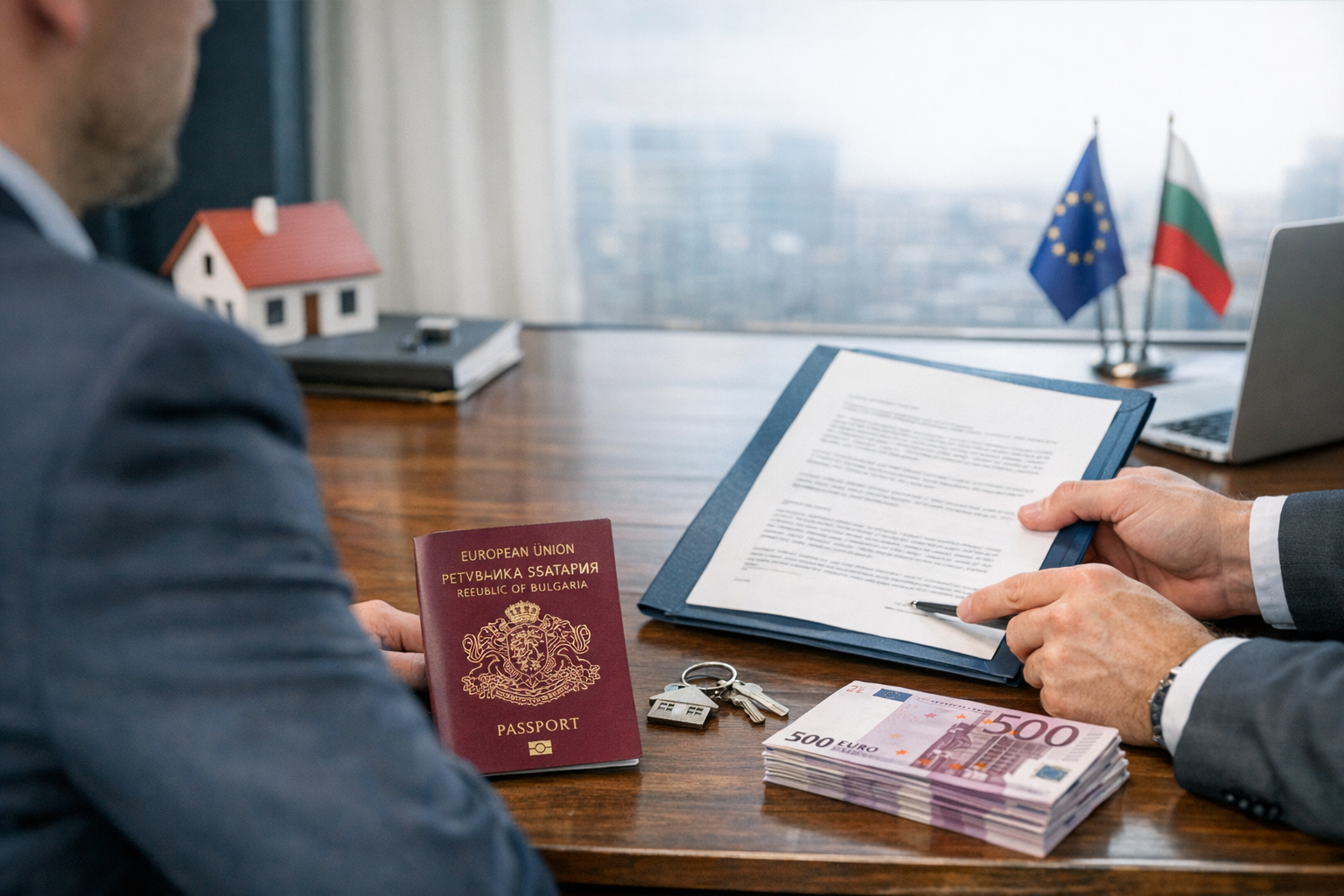


A client approached BSLC after her divorce, convinced that the apartment purchased during the marriage was “hers” because she had paid the mortgage instalments. Her former husband nevertheless claimed an equal share, relying on his care for the children and the household. The situation quickly developed into a property dispute in which the key question was not who had paid, but how contribution is proven under the law.
This question lies at the heart of almost every property dispute between spouses, whether following divorce, in property division proceedings or in a claim seeking recognition of a contribution. The risk is substantial. Without properly organised evidence, significant assets, including real estate or investments, may be lost.
Our practice regularly assists with the following matters.
- Proving contribution during marriage in ownership disputes 🏠
- Defending claims alleging a lack of joint contribution
- Legal assistance with property division after divorce
- Proving investment in property registered in the other spouse's name
- Family law advice in property disputes
What does “joint contribution” mean and who must prove it?
The principal legislation is the Bulgarian Family Code, which regulates marital community property. Compared with continental systems such as Germany's Zugewinngemeinschaft, the Bulgarian model places greater emphasis on contribution itself as the basis for community ownership.
Under Article 21(1) and (2) of the Family Code, property rights acquired during marriage are jointly owned if they result from joint contribution. The law expressly recognises the following forms of contribution.
- Providing funds
- Contributing labour
- Caring for children
- Household work
All these forms are legally equivalent. This is crucial. The court does not automatically place a higher value on financial contribution than on caring for the family.
Even more importantly, the law establishes a presumption of joint contribution. Article 21(3) of the Family Code provides that contribution is presumed until the contrary is proven.
This has the following practical consequences.
- The spouse claiming that the property is jointly owned does not have to prove contribution.
- The spouse disputing community ownership must prove a lack of contribution.
- Rebutting this presumption is difficult and requires court proceedings.
In legal practice, this means the following.
- Saying “I paid for everything” is not enough.
- It must be proven that the other spouse made no contribution at all, directly or indirectly.
As practice shows, that is extremely difficult. Even limited care for the home or children may be regarded as contribution.
Which evidence is decisive in a contribution dispute?
When a property dispute reaches court, proving contribution or its absence becomes the central issue. The relevant evidence depends on the position being advanced.
1. Proving direct financial and material contribution
This evidence is most commonly used in the following situations.
- Purchasing real estate
- Investing in property
- Repaying loans
Suitable evidence includes the following.
- Bank transfers and statements
- Loan agreements
- Payment orders
- Notarial deeds
- Sale and purchase agreements
These show who provided the funds, but are not sufficient on their own, because they do not rule out an indirect contribution by the other spouse.
2. Proving indirect contribution
This is the area clients most often underestimate. The law expressly recognises the following as equivalent to financial contribution.
- Caring for children
- Household work
- Supporting the other spouse's professional activity
Evidence may include the following.
- Witness testimony
- Social reports
- Documents concerning maternity, leave or unemployment for family reasons
- Evidence of participation in the family business
3. Proving a lack of contribution
This is the most difficult situation. Rebutting the presumption under Article 21(3) of the Family Code requires proof of the following.
- A complete absence of participation in family life
- No financial or non-material contribution
Practical examples include the following.
- A lengthy factual separation
- No shared household
- Refusal to participate in bringing up children
Even then, the court proceeds with great care. Legal scholarship and case law regard a complete absence of contribution as rare.
Common mistakes
- Confusing who paid with who contributed
- Lacking documentary evidence
- Relying only on witnesses
- Failing to challenge the presumption through the appropriate form of claim
How does the court assess contribution in property division and claims for a larger share?
Once a marriage ends, the question arises of how to divide the property. Shares are normally equal, but the law permits an exception.
Under Article 29(3) of the Family Code, either spouse may seek a larger share if their contribution substantially exceeds the other's. This is a specific claim distinct from ordinary partition proceedings.
The court makes an overall assessment.
- It considers everything acquired during the marriage, rather than a single property.
- It takes account of direct and indirect contributions.
- It compares contributions as a whole, rather than in isolation.
A contribution that is merely greater is insufficient. It must be substantially greater.
What does the court consider?
- Income and financial resources
- Participation in bringing up children
- Managing the household
- Supporting the other spouse's professional development
A spouse with a lower income may have made the greater contribution if they assumed the main responsibility for caring for the family.
Time limits and procedural features
- The claim must be brought within a short period, usually one year from the end of the marriage.
- It may be brought in partition proceedings or separately.
- It requires substantial preparation of evidence.
Practical advice
In these disputes, parties should not rely on what appears “obvious”. Courts work with evidence, rather than everyday assumptions. Even where the contribution seems clear, the outcome may be unfavourable without a properly developed legal strategy.
It is sensible to seek timely advice from a family and inheritance lawyer or plan the cost of the dispute using the legal fees calculator, particularly where substantial assets are involved.
Accurately proving contribution during marriage is not a formality. It is decisive for the outcome of a property dispute.